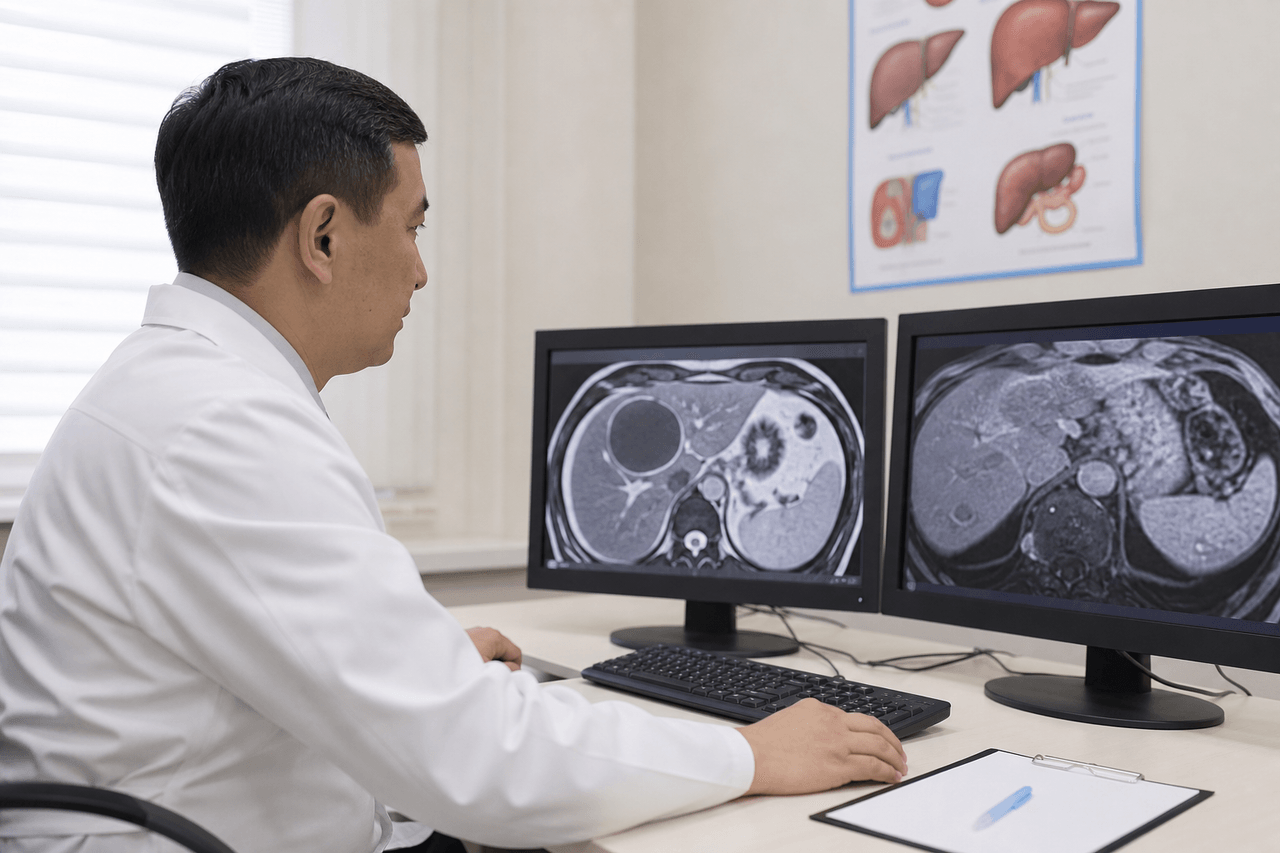
An ultrasound report mentioning a “liver cyst” or “lung mass” causes anxiety. The first thought is often major surgery. In most cases panic is premature: modern imaging defines the nature of the lesion and allows tactics including non-surgical care.
Echinococcosis can grow in the body for 5, 10, or even 15 years without symptoms. That is why early diagnosis matters — it catches disease when conservative methods can still control it.
Why early diagnosis is the key
Finding an echinococcal cyst early gives patient and physician several advantages:
- Chance to avoid surgery for small active cysts.
- Preservation of healthy liver or lung tissue.
- Shorter, gentler treatment course.
- Lower risk of cyst rupture and dissemination.
Ultrasound, CT, and blood tests
Ultrasound is the first and most important step: the physician grades cyst type by WHO classification (CE1–CE5) and separates active, transitional, and inactive stages.
CT and MRI clarify location, size, and relation to vessels. Serologic tests (ELISA) support contact with the parasite, but a negative result does not always exclude disease.
Cyst biopsy for diagnosis is usually not performed because of rupture and spread risk.
How diagnosis at Visus Medical helps avoid surgery
In the clinic, surgery is a last resort. Accurate diagnosis and the proprietary medication protocol allow scalpel-free treatment in most cases.
Follow-up ultrasound shows cyst regression: wall thickening, dead contents — confirming therapy effectiveness.
Need an echinococcosis consult?
Message us on Telegram or WhatsApp — we’ll review your scans and suggest a plan.