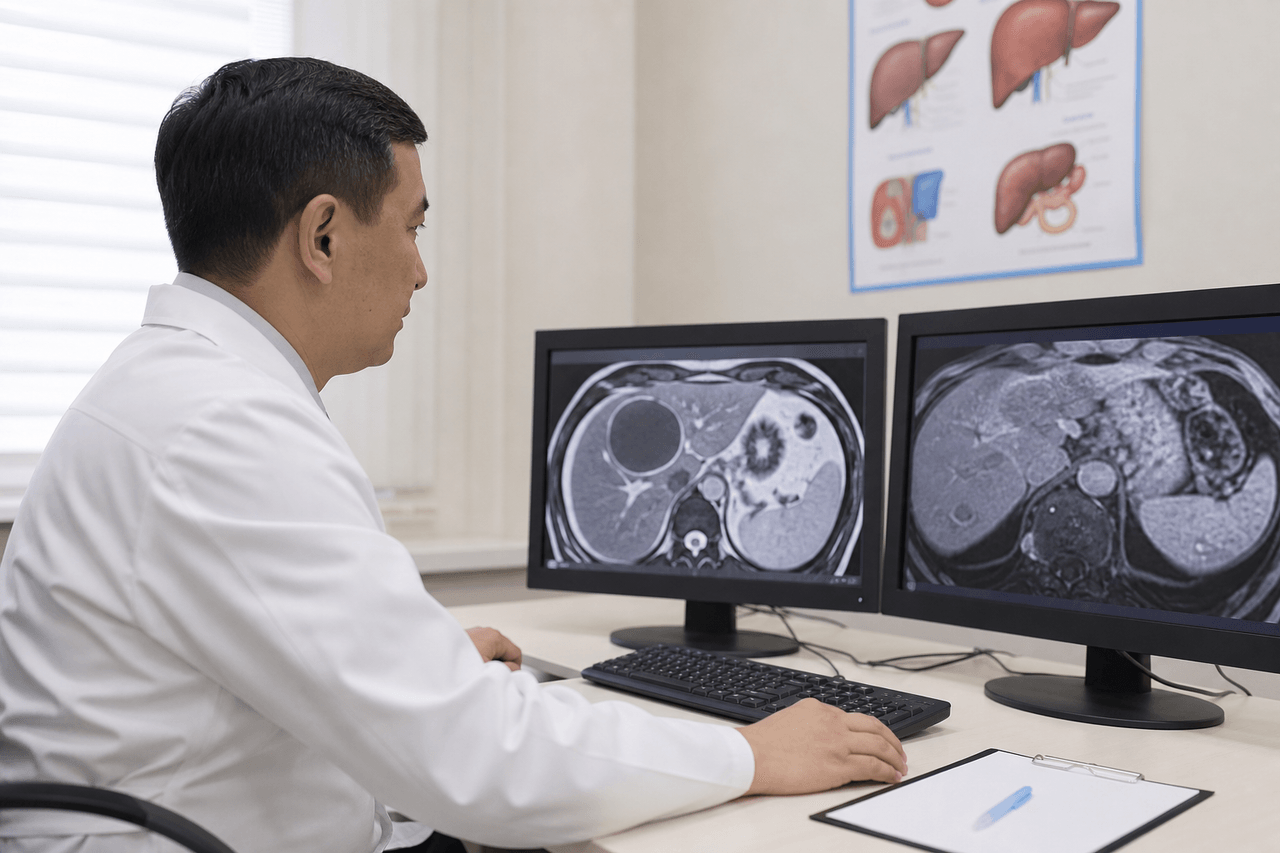
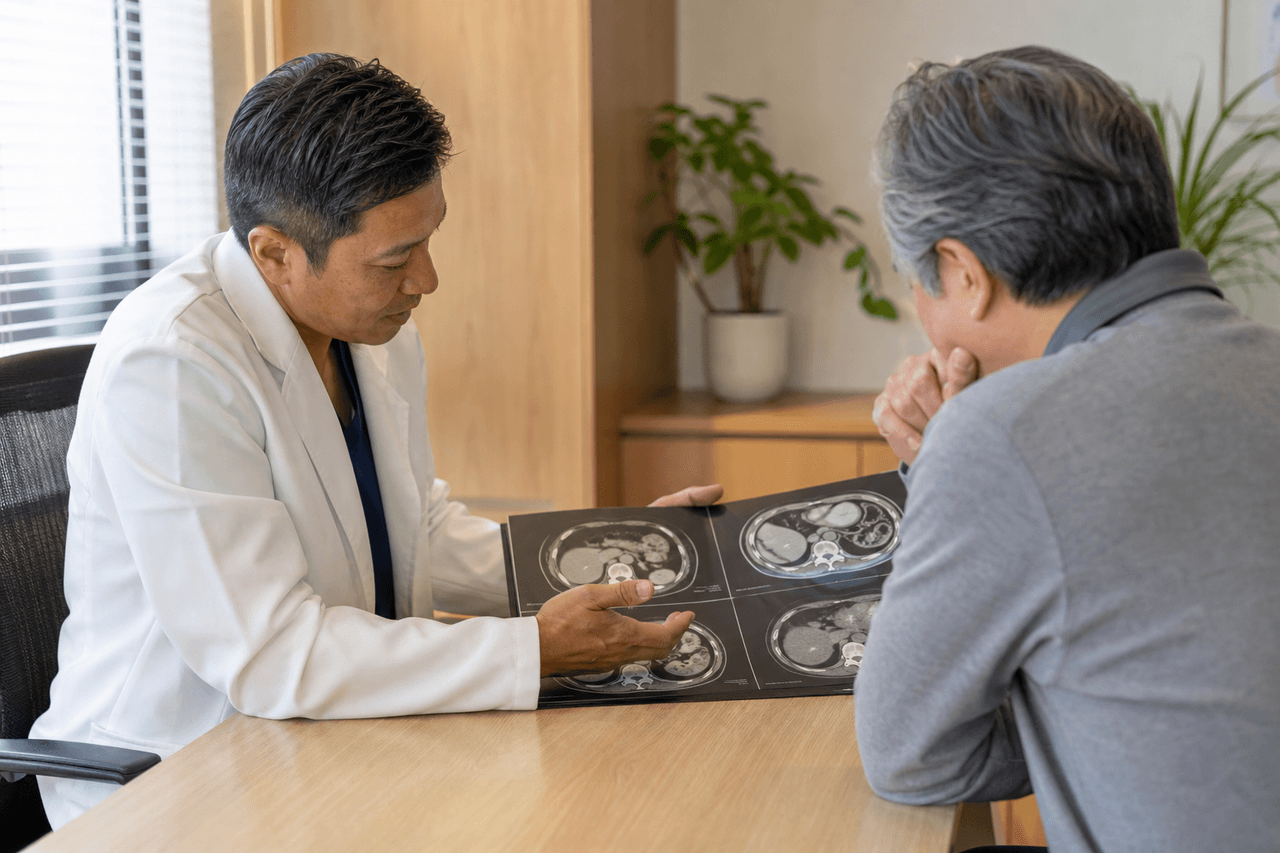
A patient receives an ultrasound report: "space-occupying lesion in the liver" or "lung focus" — and the first thought is usually cancer. Yet what often hides behind these words is echinococcosis, a parasitic disease that can be cured without surgery. A misdiagnosis is costly: incorrect surgery for echinococcosis can cause seeding throughout the entire abdominal cavity.
According to the WHO, tens of thousands of people are diagnosed with echinococcosis every year in Central Asia and Eastern Europe. Many of them were initially treated for cancer — with unnecessary chemotherapy and severe psychological stress.
Similarities and Differences
On a standard ultrasound, an echinococcal cyst and a tumour can look almost identical — a dark rounded lesion with clear or blurred margins. However, there are signs that help a doctor suspect a parasite:
- Double-layered cyst wall ("double contour sign") — typical of echinococcosis.
- Internal septa and daughter cysts — almost never seen in tumours.
- Calcifications in the wall — characteristic of inactive or chronic echinococcosis.
- Tumour markers (AFP, CA-19-9) are typically normal in echinococcosis.
- Serology (ELISA, western blot) — a specific test for the parasite.
When Additional Testing Is Needed
Contrast-enhanced CT and MRI allow detailed visualisation of the lesion's structure. In cancer, contrast accumulates within the tumour — in an echinococcal cyst it does not. MRI is particularly informative for lesions near major vessels and bile ducts.
Cyst biopsy is not performed when echinococcosis is suspected: puncturing the cyst risks rupture and severe anaphylactic shock. This is exactly why non-invasive diagnostics and physician expertise are so critical.
How We Diagnose at Visus Medical
Our specialists have been working with echinococcosis for over 15 years. At the initial consultation the doctor reviews all available imaging, orders serological tests, and refers for CT or MRI if needed. The goal is an accurate diagnosis before any treatment decision is made.
If you already have a report mentioning "suspected tumour" or "space-occupying lesion" — come with your results. Often a single consultation is all it takes to clarify everything.
Need an echinococcosis consult?
Message us on Telegram or WhatsApp — we’ll review your scans and suggest a plan.