Treatment at Visus Medical: proprietary non-surgical method
Our approach for Azerbaijan focuses on a structured route without random protocol changes. Evidence from Azerbaijan shows early therapy yields better outcomes. We do not tell everyone that “surgery is unnecessary.” For most cases of cystic echinococcosis there is a documented, patented alternative — and we have built experience since 1995.
The Visus Medical proprietary method is a medication course aimed at parasite death and gradual cyst regression under ultrasound and CT monitoring. Treatment is outpatient: no hospital stay, no general anesthesia, no months of recovery after an incision.
Consultations are led by a physician certified by the Ministry of Health of Uzbekistan. For Azerbaijan, avoiding diagnostic delays is especially important. Most often the cyst is in the liver — the method also applies to lungs, kidneys, and other organs. Patients come from Russia, Kazakhstan, Kyrgyzstan, and Tajikistan — including after recurrence; many first send scans remotely.
- No general anesthesia or surgical incision.
- No removal of part of the liver or lung.
- No hospitalization — outpatient treatment.
- We work with post-surgical recurrence.
- Dynamic monitoring: ultrasound and CT at every stage.
- Any cyst location: liver, lungs, kidneys, and other organs.
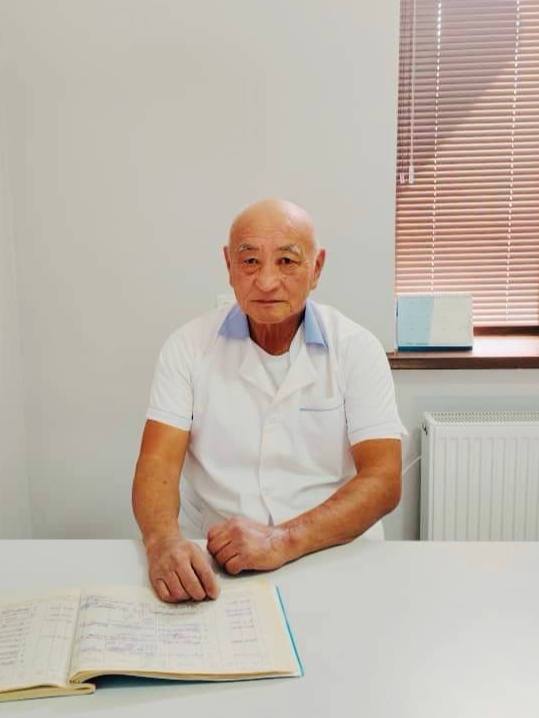
Elfréntiy Li
Chief physician — parasitologist, traditional medicine specialist
- 29 years treating cystic echinococcosis without surgery
- Higher School of Folk Medicine — licensed physician
- 600+ patients with documented results on follow-up imaging
- Proprietary non-surgical protocol in clinical use since 1995
“When you are told “surgery only,” a second opinion matters. We have treated echinococcosis without surgery for 29 years.”
Why patients choose Visus Medical
For patients from Azerbaijan, early diagnostic verification and a properly structured therapy start are decisive. When a diagnosis feels like a sentence, it helps to know you are not obliged to accept the first option. Here is what sets us apart from the standard surgical route:
- MoH-certified care in Uzbekistan — a physician authorized to practice.
- 29+ years focused on cystic echinococcosis — a specialty clinic, not one service among many.
- We handle complex cases: multiple cysts, giant CE, recurrence after surgery.
- Patients from 5 CIS countries — many come after surgery was refused or failed.
- Transparent follow-up: imaging before, during, and after the course.
- Free initial consultation on your scans — send ultrasound or CT before the visit.
How we work with patients from Azerbaijan
For cases from Azerbaijan, we focus on practical clarity: what to do first and how to measure progress.
For patients in Azerbaijan, consistent step-by-step therapy is the core principle.
For patients from Azerbaijan, our priority is non-surgical care with continuous monitoring.
For referrals from Azerbaijan, we evaluate comorbid factors and adapt treatment pace accordingly.
Our cases from Azerbaijan show that early diagnostic validation lowers the risk of prolonged complications.
How to reach Visus Medical: for patients from Azerbaijan
Из Баку в Ташкент выполняются прямые рейсы AZAL и других авиакомпаний — около 2,5–3 часов; от аэропорта Ташкента до Visus Medical в Нурафшоне на такси около часа.
Прямое авиасообщение Баку — Ташкент позволяет не терять рабочие дни: многие пациенты from Baku совмещают лечение с деловой поездкой в столицу Узбекистана.
Для жителей Baku характерна кавказская эпидемиология паразитарных заболеваний — контакт с домашними животными, сырые продукты с рынка; мы учитываем это при разборе анамнеза и выборе схемы лечения.
Echinococcosis: what patients from Azerbaijan should know
In summer by the Caspian many have routine ultrasound after vacation — we explain when a cyst needs treatment and when watchful waiting is enough.
Clinic reports in Azerbaijan sometimes confuse a simple cyst with a parasitic one. Review needs ultrasound or CT, not one line on paper.
Contact with livestock and dogs in suburbs of Azerbaijan often appears in stories of cystic echinococcosis.
Follow-up ultrasounds can be done at home in Azerbaijan, and we discuss progress remotely.
Payment, course length, and number of visits are discussed before departure from Azerbaijan.
If surgery was offered «by default» — send files. We will say whether your picture fits a course without a cut.
Online scan review before the flight saves time: you travel with a clear visit plan.
Liver cyst surgery is available in major centers in Azerbaijan, but a non-surgical option is often sought separately — as a second opinion.
From Baku a direct flight is convenient: one or two visits per course, the rest — chat and ultrasound at home.
We work in Russian. Documents and scans are accepted digitally.
Patients from Azerbaijan bring ultrasound and blood tests from labs in Azerbaijan. We match them with what the scans show.
Liver cyst on ultrasound or CT: how to recognize echinococcosis
For residents of Azerbaijan, we adapt the protocol to local realities — from logistics to repeat test access. For Azerbaijan, avoiding diagnostic delays is especially important. Most people arrive without a ready diagnosis — the report says “hepatic cystic lesion,” “parasitic cyst,” or simply “liver cyst.”
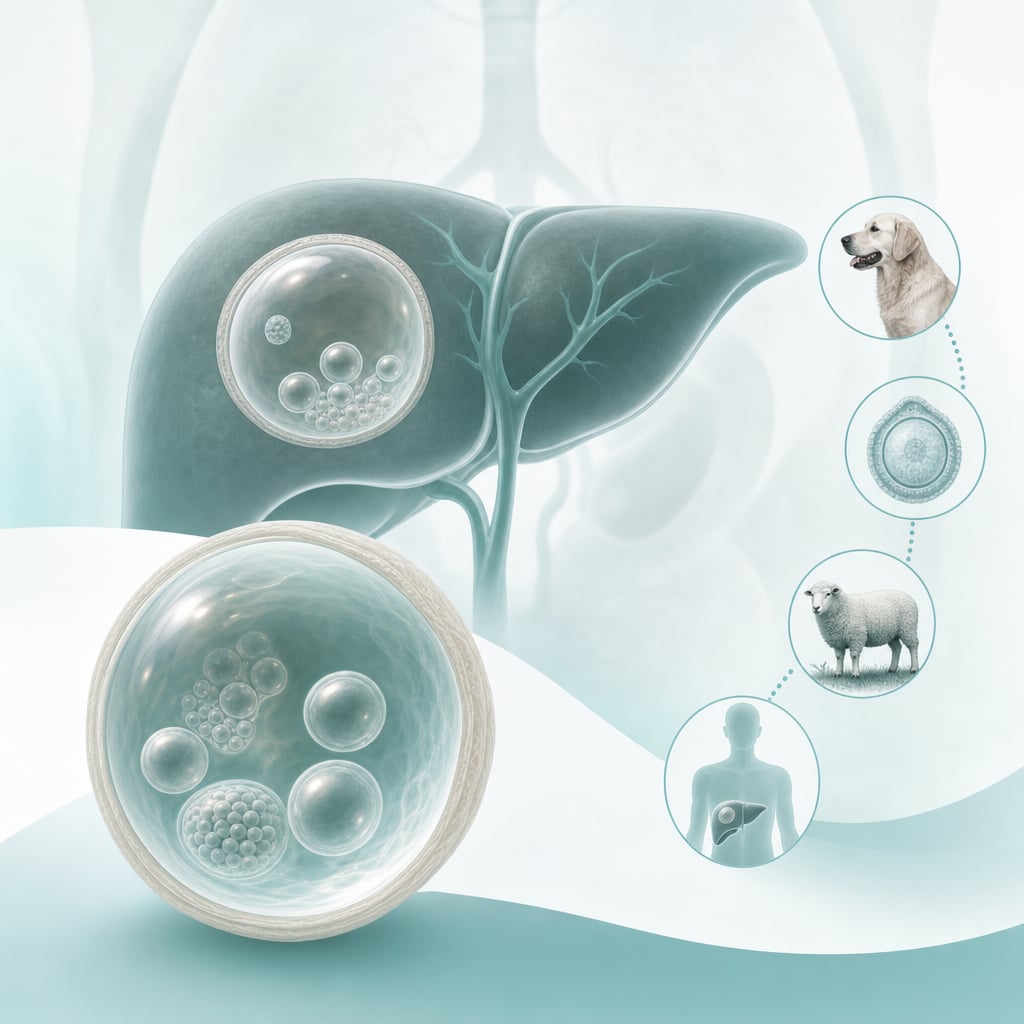
In cystic echinococcosis, imaging usually shows a round fluid-filled lesion with a capsule; sometimes daughter cysts are inside (“matryoshka”). Stage is assessed by the WHO classification (CE1–CE5) — that guides the tactic.
To avoid confusing it with a simple cyst or another lesion, you need ultrasound + CT/MRI + serology and an experienced eye. We advise patients from Azerbaijan to track their progress systematically. You can send a report from Almaty, Astana, Moscow, or any city — before traveling to Tashkent.
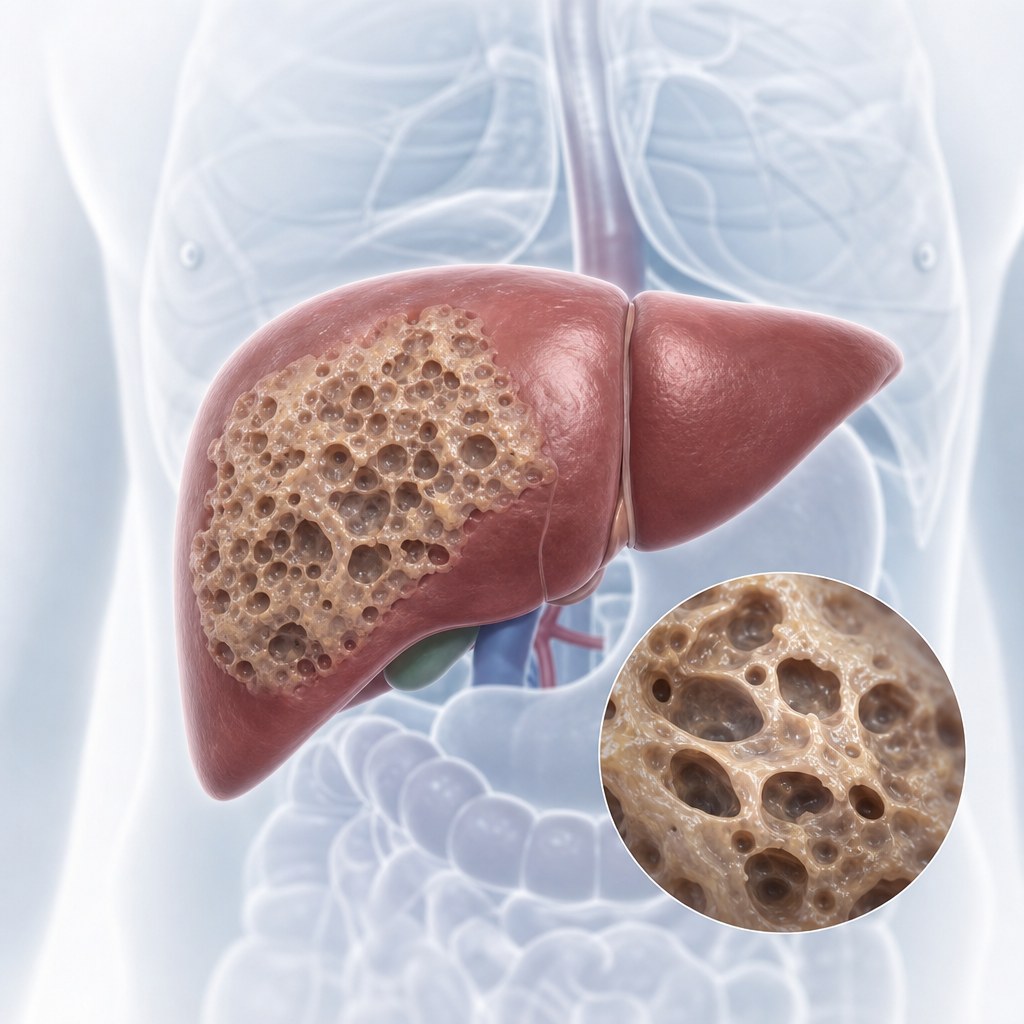
If imaging shows no clear capsule and the process looks infiltrative — it may be alveococcosis: we have a separate alveococcosis treatment service.
- If surgery was offered immediately — get a second opinion on your scans before consenting.
- Treatment starts after WHO cyst staging (CE1–CE5).
- The smaller the cyst, the shorter and more predictable the dynamics on follow-up ultrasound.
What is cystic echinococcosis? — approach for Azerbaijan
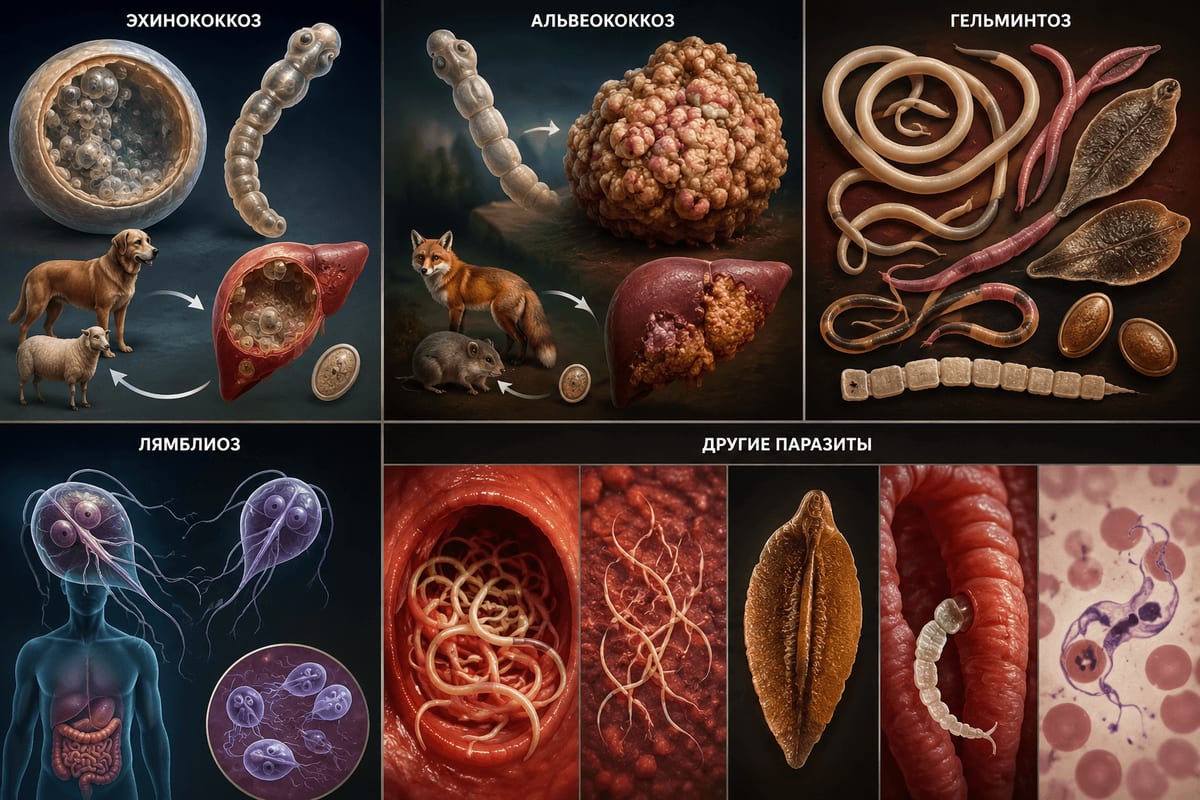
If you live in Azerbaijan, we can offer a hybrid format: remote stages + in-person checkpoints. Cystic echinococcosis (CE) is caused by Echinococcus granulosus. Larvae form one or several cysts in the liver (most often), lungs, and other organs. Cysts can grow for years without symptoms, then cause severe complications — including rupture with anaphylactic shock. With the right approach, the disease can be treated without surgery.
Symptoms: a silent enemy: what patients from Azerbaijan should know
The insidious nature of echinococcosis is a long asymptomatic period. We advise patients from Azerbaijan to track their progress systematically. A cyst may grow for 5–15 years without signs.
First symptoms appear when the cyst reaches significant size and compresses neighboring organs or ducts.
An acute complication is cyst rupture (spontaneous or traumatic): contents spill into the cavity, with possible anaphylactic shock and dissemination.
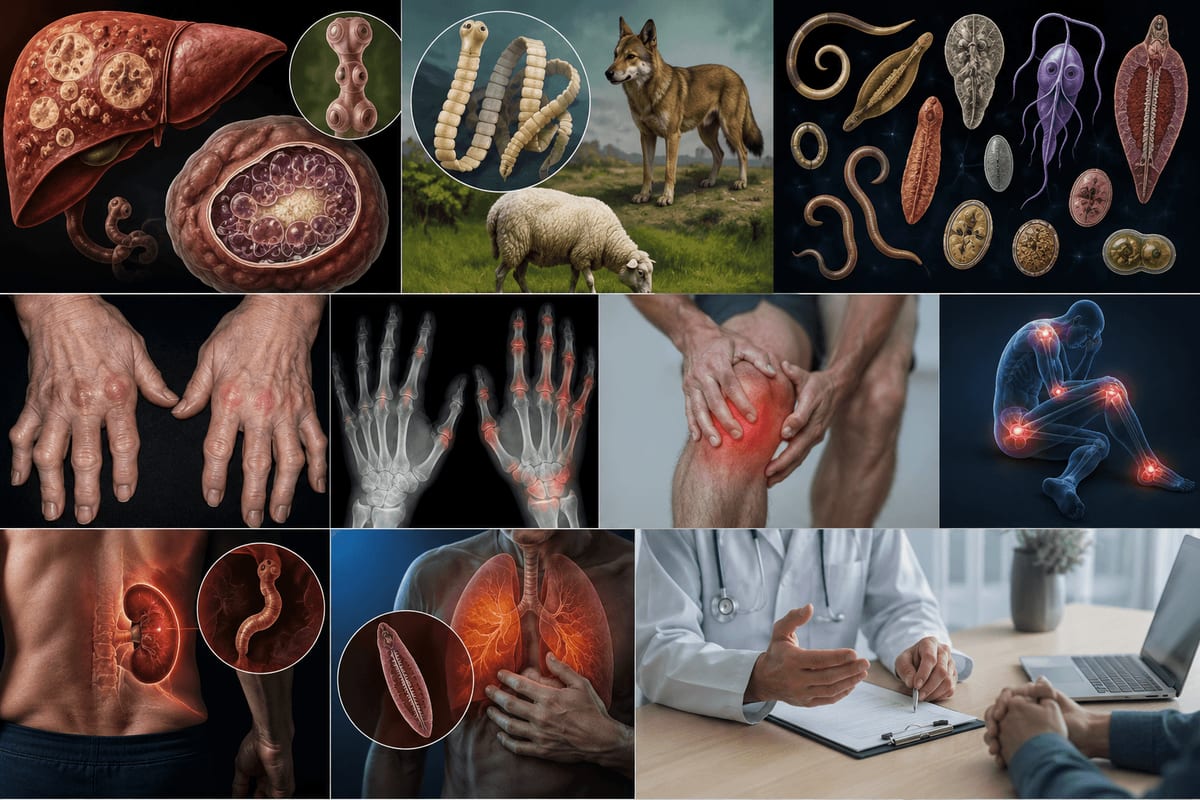
- Liver: dull pain or heaviness in the right upper abdomen, nausea, loss of appetite; bile-duct compression may cause obstructive jaundice.
- Lungs: chest pain, shortness of breath, dry cough, sometimes hemoptysis.
- General: urticaria, itching, weakness, fatigue, weight loss.
Diagnosing echinococcosis: ultrasound, CT, lab tests
For referrals from Azerbaijan, we emphasize transparency: every stage has a clear purpose and expected outcome. Diagnosis is a chain: imaging shows the cyst and stage, serology confirms contact with the parasite, and the physician links this to the history. At the first consultation we work with what you already have — ultrasound, CT, or MRI.
Cyst biopsy for diagnosis is generally not performed because of rupture and seeding risk.
- Ultrasound — accessible primary diagnosis and WHO staging (CE1–CE5).
- CT and MRI — location, size, and relations to vessels and ducts.
- Serology (ELISA, IHA) — antibodies to echinococcus; a negative result does not always rule out disease.
Treatment approaches in world practice
For patients from Azerbaijan, we align the care plan with local logistics, test availability and follow-up timing. Evidence from Azerbaijan shows early therapy yields better outcomes. Tactic depends on size, location, and cyst activity stage (CE1–CE5):
- Watch and Wait: only for inactive CE4–CE5 without symptoms or complication risk.
- Medication therapy: long-term antiparasitic regimens — the basis of our approach at a suitable stage.
- PAIR: ultrasound-guided puncture with aspiration and sclerosant — not for all cyst types.
- Surgery: for giant cysts, acute complications, or when conservative tactics are exhausted.
Parasite life cycle: how infection happens
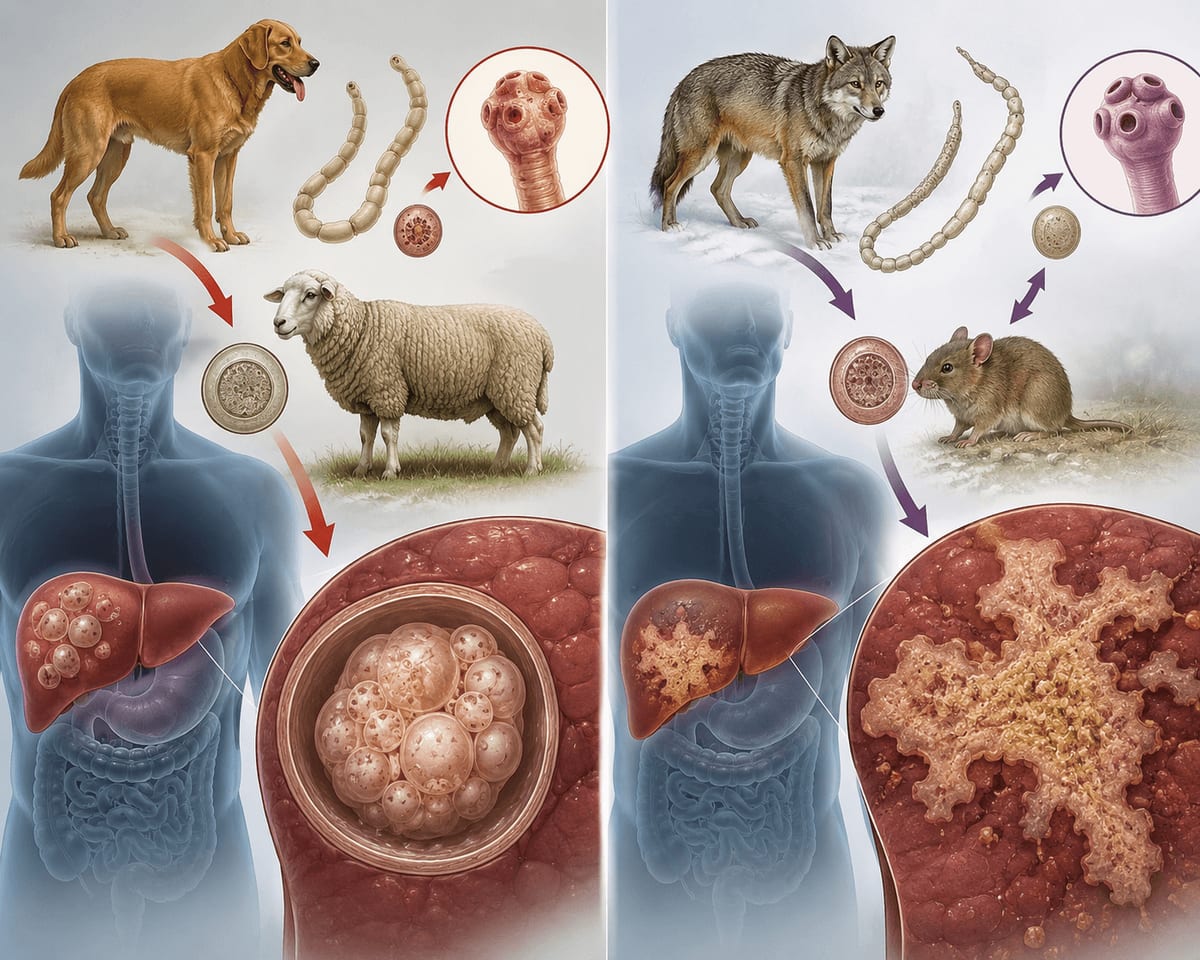
If you contact us from Azerbaijan, consultation format and treatment pacing are agreed in advance. Echinococcus granulosus has a two-host cycle. Humans are accidental intermediate hosts: infection by swallowing eggs (not directly from sheep).
In the intestine a larva emerges from the egg, enters the bloodstream, and most often settles in the liver or lungs, where a cyst develops.
- Definitive hosts: dogs and other carnivores — adult worm in the intestine, eggs in feces.
- Intermediate hosts: sheep, cattle, goats — cysts in organs.
- Human risk: contact with dog fur/tongue, unwashed vegetables and greens, water from contaminated sources.
Prevention: what patients from Azerbaijan should know
Our approach for Azerbaijan focuses on a structured route without random protocol changes. If the diagnosis is already made — do not delay. For Azerbaijan, avoiding diagnostic delays is especially important. A cyst does not resolve on its own: the smaller the size, the shorter the course. Write to us — we will review your case.
- Wash hands after contact with dogs and gardening.
- Deworm dogs every 3–4 months as advised by a veterinarian.
- Wash greens, vegetables, and berries thoroughly.
- Do not drink water from unchecked open sources.
- Limit children’s contact with stray dogs.
Frequently asked questions (FAQ) — guidance for from Azerbaijan
No. Humans are a “dead-end host.” Infection occurs only via eggs shed by definitive hosts (dogs and others).
There is risk if the dog is not dewormed. Regular treatment every 3–4 months and hand hygiene after contact reduce risk.
Yes. A large share of patients have cyst recurrence after surgery. The medication method acts systemically, not only by “removing the sac.”
In CE, full parasite destruction and cyst regression are achievable. We do not promise a result without reviewing scans — send ultrasound or CT.
Duration depends on WHO stage, size, and number of cysts. We assess dynamics with ultrasound/CT at every stage.
Cyst growth, organ compression, obstructive jaundice, respiratory failure. The most severe risk is rupture with anaphylaxis and seeding.
No. Cysts vary. Diagnosis combines ultrasound/CT, serology, and clinical picture. Send scans — we help clarify before a surgery decision.
Surgery is justified in acute complications, some giant cysts, and when medication tactics are exhausted. After reviewing scans we say honestly whether a non-surgical course fits.
Cystic echinococcosis is a separate cyst with a capsule. Alveococcosis grows infiltratively, like a tumor. These are different services: more on the alveococcosis treatment page.
Common questions from patients from Azerbaijan
We analyze prior treatment experience and adapt the new protocol accordingly — it never invalidates a fresh course.
Ultrasound, CBC, biochemistry, and any available CT/MRI scans. Additional tests determined case by case.
We analyze prior treatment experience and adapt the new protocol accordingly — it never invalidates a fresh course.
Ultrasound, CBC, biochemistry, and any available CT/MRI scans. Additional tests determined case by case.
We analyze prior treatment experience and adapt the new protocol accordingly — it never invalidates a fresh course.
By scans. A round cyst with a wall — likely echinococcosis. A spot without clear borders — alveococcosis (separate service). Send files — we will say which applies.
Yes. Send ultrasound/CT before the flight. If data are enough — you get a preliminary plan and a list of what to bring.
Some controls can be done in Baku or your region, and we review progress remotely. In-person visits follow the course schedule.