What PAIR means
The acronym describes puncture, aspiration, injection of a suitable agent and re-aspiration. It names a medical procedure, not permission to puncture every cyst. Appropriate expertise, imaging guidance and facilities for managing complications are required.
This discussion concerns cystic echinococcosis, particularly selected liver cysts. An infiltrating alveolar lesion does not become suitable for PAIR merely because a report calls it a cyst.
Selecting a suitable case
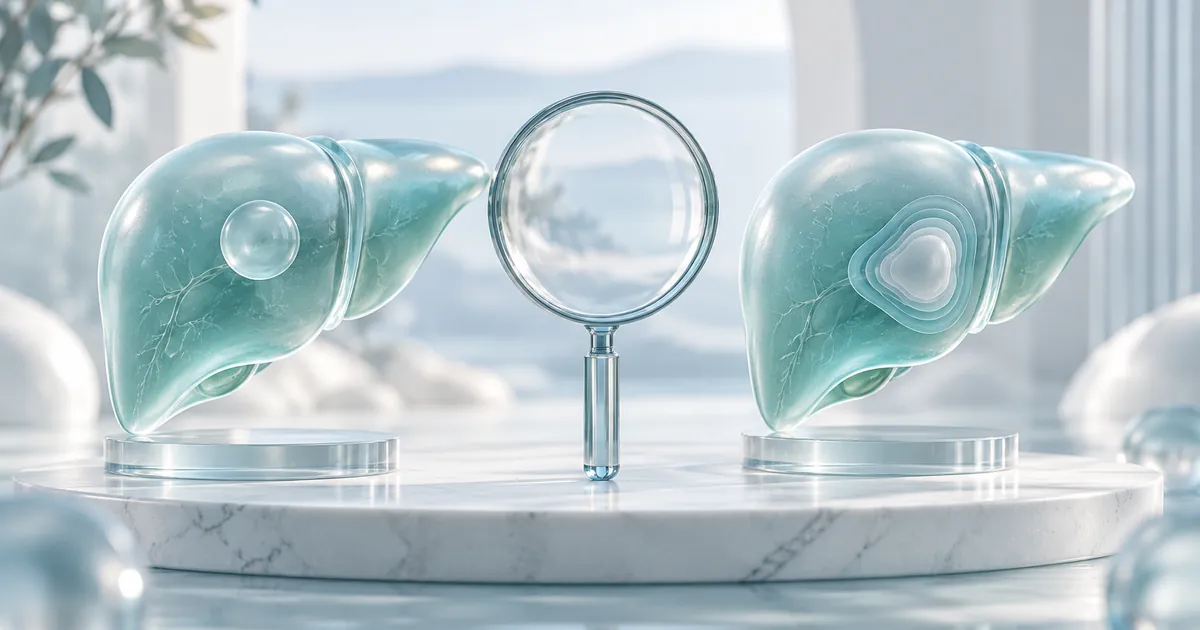
Guidelines consider ultrasound stage, size, location and complications. PAIR may be an option for selected CE1 and CE3a cysts. Other circumstances may call for medication, another intervention, surgery or observation instead.
Communication with the bile ducts is an important limitation: standard PAIR is not suitable in that setting. Anatomy and contraindications must be assessed beforehand. Rules for liver cysts cannot simply be applied to the lung, heart or brain.
Why this differs from routine diagnostic aspiration
An incidental fluid-containing lesion should not be assumed to be a simple cyst before its nature is clarified. Echinococcosis requires a planned approach because intervention can involve allergic reactions, leakage and secondary spread.
Equally, saying that a parasitic lesion can never be punctured is too absolute. Specialist indications and techniques exist. The decision depends on the clinical purpose, team expertise and facilities rather than the general word “puncture”.
Questions before deciding
Ask which stage has been established, why this procedure is being proposed and how relevant limitations were assessed. Discuss alternatives, accompanying medication and the schedule for follow-up imaging.
This article does not mean that PAIR is performed at Visus Medical. A consultation can review existing investigations and discuss an appropriate referral route. Medication and follow-up are individual decisions, not conclusions drawn from another patient’s successful experience.
Preparing for a consultation
Gather existing reports, the actual imaging files and earlier results with dates. Include previous medicines, treatment periods and operations. Comparing this information helps you ask focused questions and avoid repeating investigations unnecessarily.
An initial review of existing documents can be discussed remotely. The clinician will identify missing information and whether an in-person assessment is needed. The suitable format and management depend on the individual case.
Further reading
Sources
Discuss your findings and care options
Need an echinococcosis consult?
Message us on Telegram or WhatsApp — we’ll review your scans and suggest a plan.