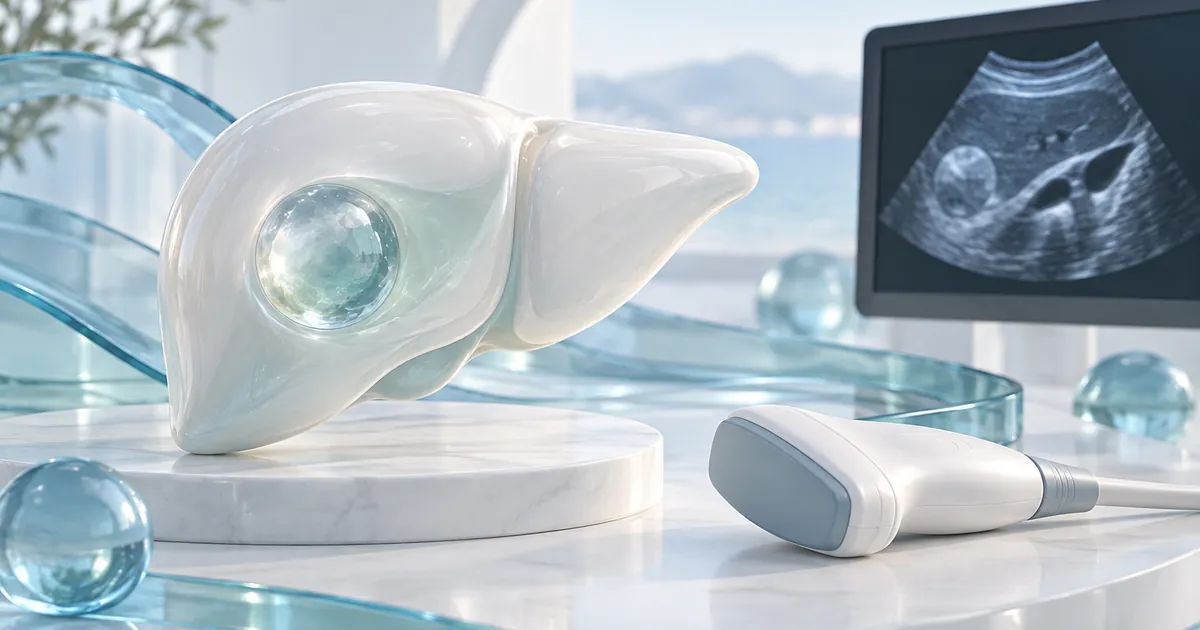
What an ultrasound finding means
A cyst describes a fluid-containing lesion, not its cause. A simple non-parasitic cyst and some echinococcal cysts can look similar. The full examination, image quality and clinical context matter more than the word used in one line of a report.
The clinician assesses walls, membranes, internal compartments and daughter cysts where present. Some appearances are atypical. Comparing a single screenshot with an online picture can lead both to unnecessary treatment and to missed disease.
What helps clarify the cause
Start with the full ultrasound report and any earlier imaging. An expert ultrasound, CT or MRI may be requested when the finding is uncertain. These examinations answer different questions about the contents, nearby structures and possible complications.
Antibody tests may add information when indicated. A positive result does not turn every cyst into a parasitic cyst, while a negative result does not exclude all echinococcosis. Diagnosis combines findings rather than relying on a single size or laboratory value.
Why management differs
A confirmed simple cyst without symptoms or concerning features may not require active treatment. For an echinococcal cyst, stage and other features guide the choice between observation, medicine and intervention. Management cannot be transferred automatically from one cause to another.
An offer to “just drain the cyst” needs to be discussed after its nature has been clarified. Routine diagnostic aspiration and a specialist PAIR procedure are different situations. Suspected echinococcosis requires appropriate preparation and facilities.
Questions for the consultation
Ask which features support a simple or parasitic cyst, whether the existing images are sufficient and which changes over time are important. Before repeating every examination, ask how each proposed test will change the plan.
Sudden severe pain, fever, jaundice or significant deterioration needs an in-person assessment. When the condition is stable, an initial review of existing records can help identify the next necessary investigation.
Preparing for a consultation
Gather existing reports, the actual imaging files and earlier results with dates. Include previous medicines, treatment periods and operations. Comparing this information helps you ask focused questions and avoid repeating investigations unnecessarily.
An initial review of existing documents can be discussed remotely. The clinician will identify missing information and whether an in-person assessment is needed. The suitable format and management depend on the individual case.
Further reading
Sources
Discuss your findings and care options
Need an echinococcosis consult?
Message us on Telegram or WhatsApp — we’ll review your scans and suggest a plan.