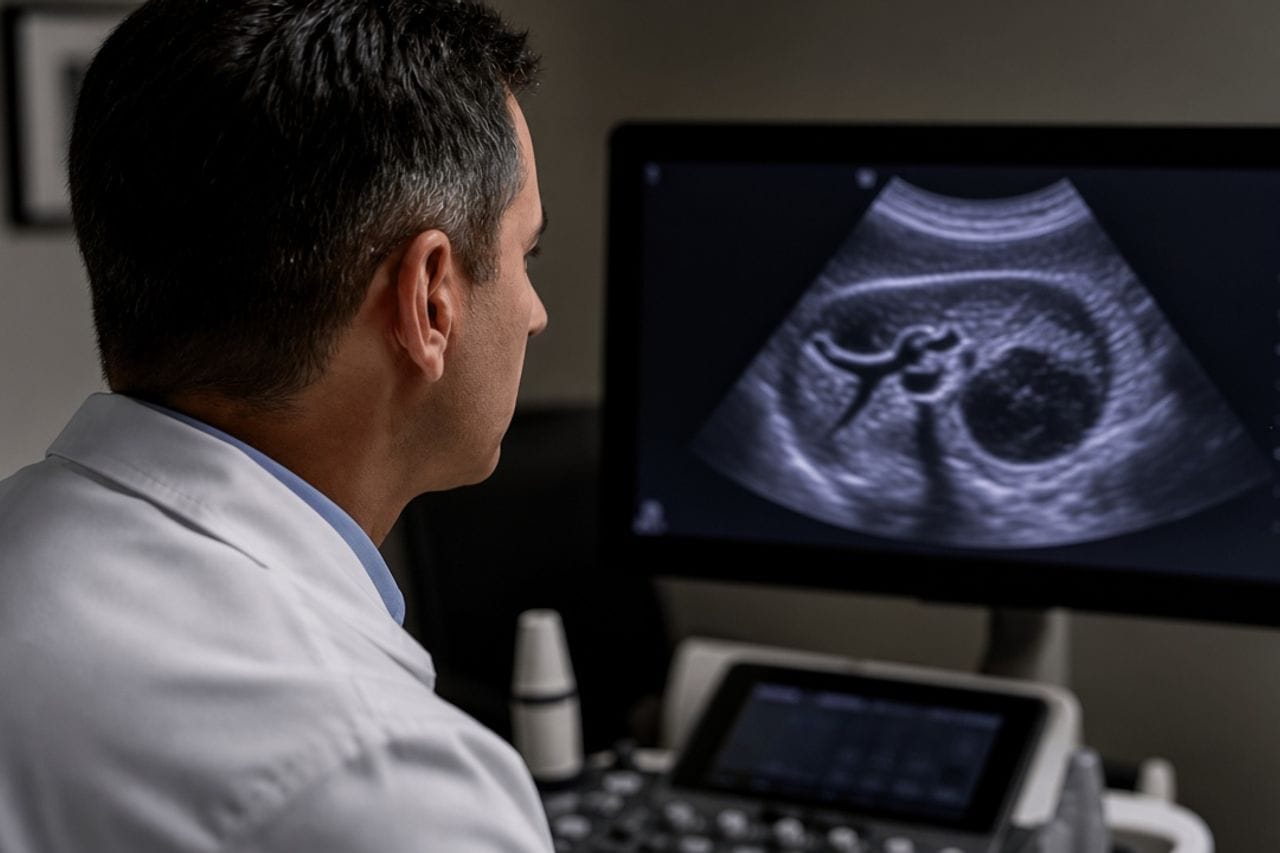
An echinococcal cyst of the liver or lung can grow for months and years with almost no complaints. A person finds it on ultrasound "while they were there" and lives with the note "observe." Rupture changes that picture in minutes: the wall fails, and fluid and daughter vesicles spill out.
This is a complication, not a gastritis flare and not a "pulled muscle." Where the cyst opened decides both the danger of the first hour and the plan for weeks ahead. Into the abdominal cavity, into the bile ducts, and into the pleura — the tactics are different.
In Central Asia cystic echinococcus is common, and some ruptures happen after the cyst was already seen on a scan and the decision was postponed. So it is worth knowing the signs in advance, not recalling them in the ambulance.
Where the cyst can rupture
The best-known path is into the free abdominal cavity. Contents spread over the peritoneum. Immediately that is pain and sometimes a severe allergic reaction. Later, new cysts can grow from daughter elements. How that looks months later: abdominal echinococcosis.
The second path is into a bile duct. Then colic and jaundice come first, not a rash. That is a separate story: rupture into the bile ducts. The third is from the lung into a bronchus or the pleura: cough with fluid, shortness of breath, chest pain. About the bronchus: lung cyst rupture.
Less often the cyst opens into a vessel or a neighboring organ. A single ultrasound "before" does not always show which path is more likely. Closeness to ducts, a thin wall, large size, and a recent blow to the abdomen raise the risk, but rupture also happens with a cyst that was called quiet.
Signs you cannot wait out
Sudden pain in the abdomen or chest, cold sweat, weakness, a body-wide rash, facial swelling, wheezing, a feeling of air hunger, a drop in blood pressure. This is a reason for an ambulance, even if the diagnosis "echinococcus" is not yet final but a liver cyst has already been described.
The allergic reaction can come from the cyst contents themselves. It may pass in an hour, and the person decides it "let go." The rupture is not cancelled by that: peritoneal seeding continues on its own and will show later.
- Do not dull the pain with a tablet "until Monday" and do not wait for a planned ultrasound.
- Tell the crew that a liver or lung cyst was already on a scan.
- A rash and a drop in pressure matter more than "exactly where it stabs."
- After stabilization you need scans of the abdomen and chest, not one blood test.
- If the pain went away, still be seen: the rupture may have been small.
How this is not ordinary pain in the side
Heaviness and dull pain with a growing cyst build over weeks. Rupture is sudden. Biliary colic from a stone is also sudden, but without a rash and without a known parasitic cyst it is more often blamed on the gallbladder. If the cyst is already in the chart, that version must be named out loud.
Suppuration gives fever and pain, but usually not in a single minute. It can coincide with rupture. You cannot tell them apart by phone; neither is for a home medicine cabinet. About fever and an "abscess" on a scan: cyst suppuration.
Alveococcosis rarely "bursts" like a bubble: it has no such capsule. A sudden catastrophe with a cyst is almost always cystic echinococcus. The mix-up of terms is covered here: echinococcosis and alveococcosis.
What happens in the first day
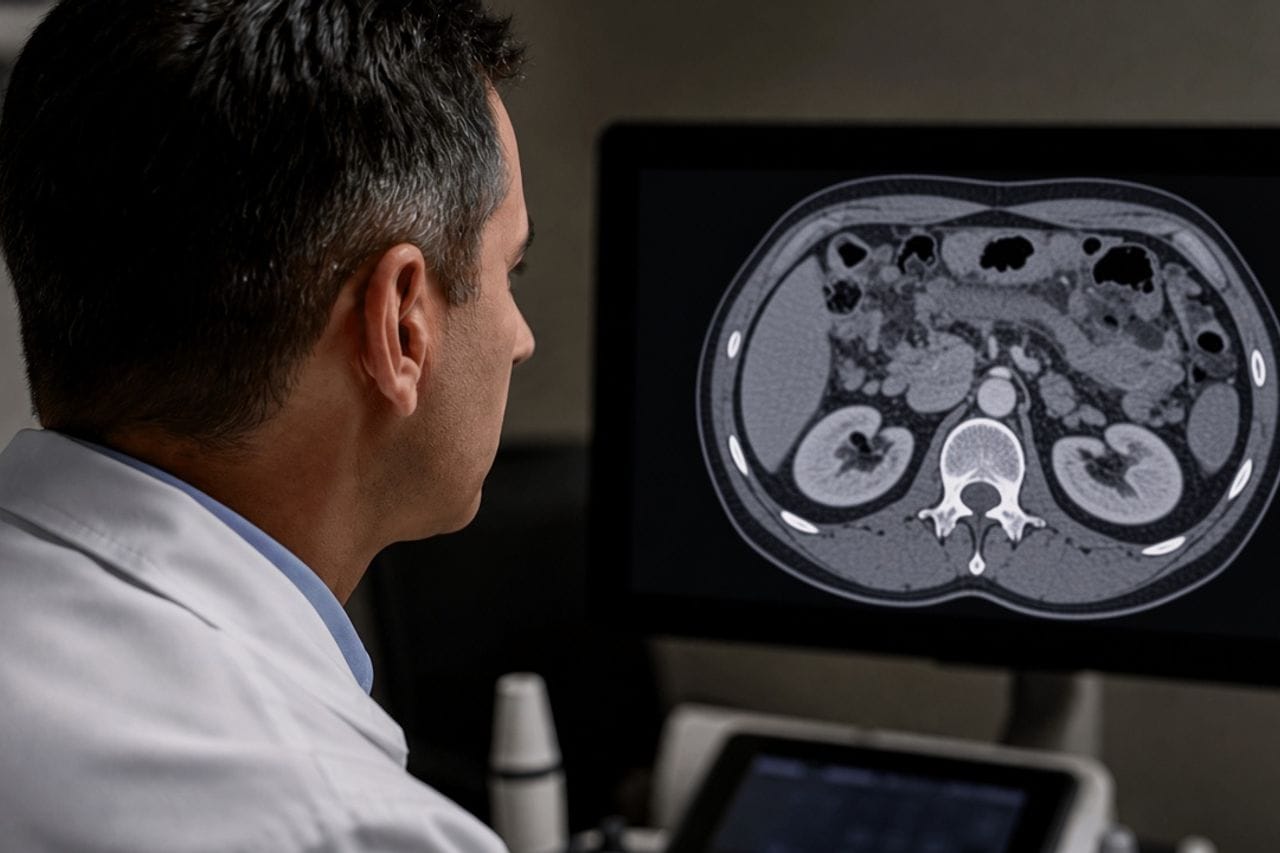
In the emergency department they first hold blood pressure and breathing. Then they look for where the contents went: ultrasound, more often abdominal CT, and if there is chest pain — the chest as well. An antibody test in the acute hour almost never decides anything: it does not show rupture.
If the cyst opened into the abdomen, the surgeon assesses whether remnants must be removed urgently and the cavity washed. If there is a block in a duct — first they restore bile flow. If it is the lung — they check whether bronchi are blocked by membranes.
A quiet medication course used for an intact small cyst is not the first step here. It may be added after the acute complication is controlled. Planned removal of an intact cyst is a different situation: when they operate.
Why "it went away by itself" still needs follow-up
A small tear is sometimes written off as colic. Months later they find a scatter of small cysts on the peritoneum or a new cyst next to the old one. The person does not link this to the evening when it "stabbed and let go."
Follow-up after any suspicion of rupture is CT, not the phrase "we will watch on ultrasound in a year." Old scans are needed for comparison: what was one cyst, and what appeared after.
The family is also worth checking, but that is not instead of working through the rupture itself. Screening of relatives: who to examine.
- Keep the ambulance discharge and all discs, not only the paper report.
- Ask whether they looked for cysts over the whole peritoneum, not only in the liver.
- Recurrent pain, fever, or jaundice after it "let go" — see a doctor the same day again.
- Do not start any antiparasitic course yourself on internet advice.
- Write down the date of the episode: it is needed when later scans are read.
Review at Visus Medical
If rupture already happened and you were discharged "to observe," send the discharge summary, ultrasound, and CT. We look at whether a cavity remains, whether there are signs of seeding, and what the next step is: follow-up, a course, or a surgeon.
If the cyst is still intact but large, thin-walled, or there has already been colic, we will review the risk before this becomes an ambulance. WHO stage is needed here too; it does not cancel urgency after a rupture that has already happened: CE1–CE5.
Echinococcosis. Bring the scans in full; comparison with older studies often matters more than one fresh frame.
Need an echinococcosis consult?
Message us on Telegram or WhatsApp — we’ll review your scans and suggest a plan.