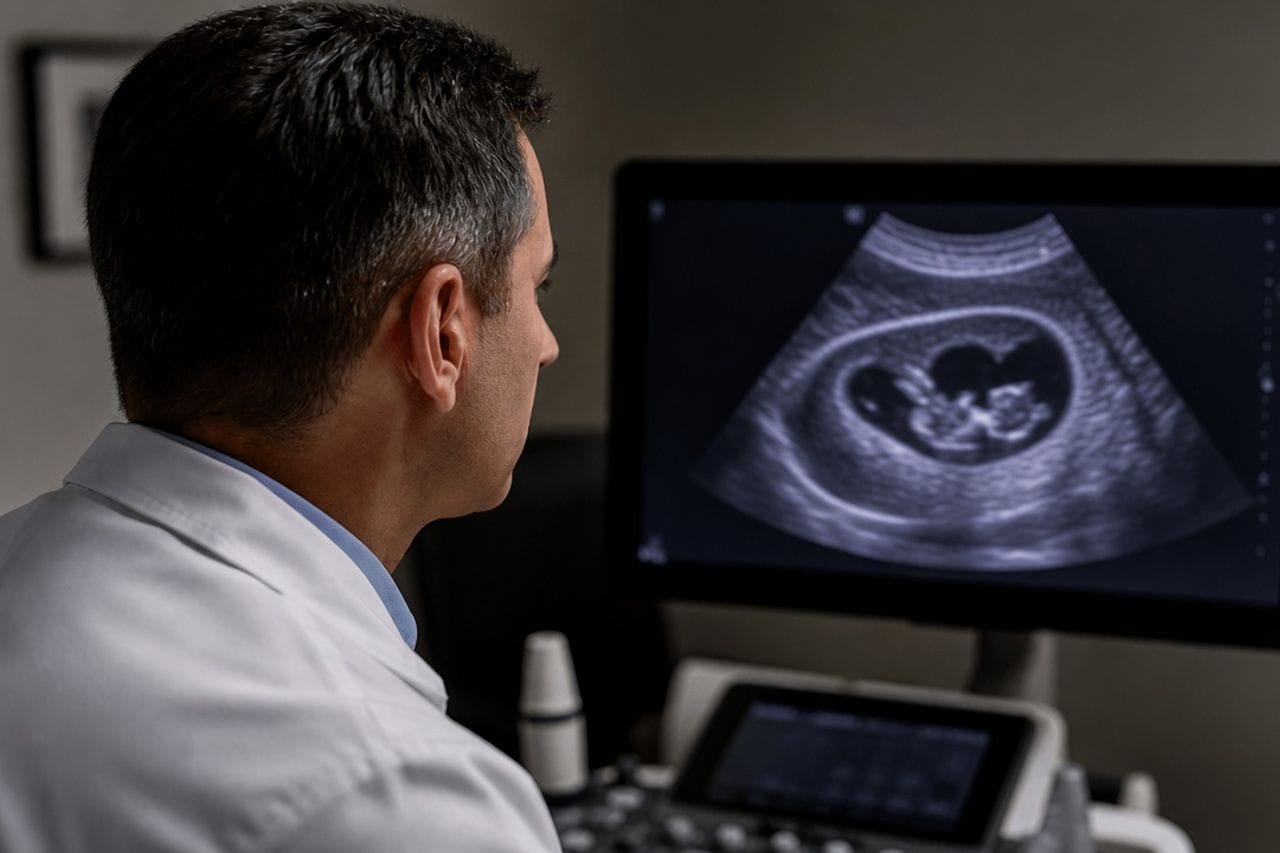
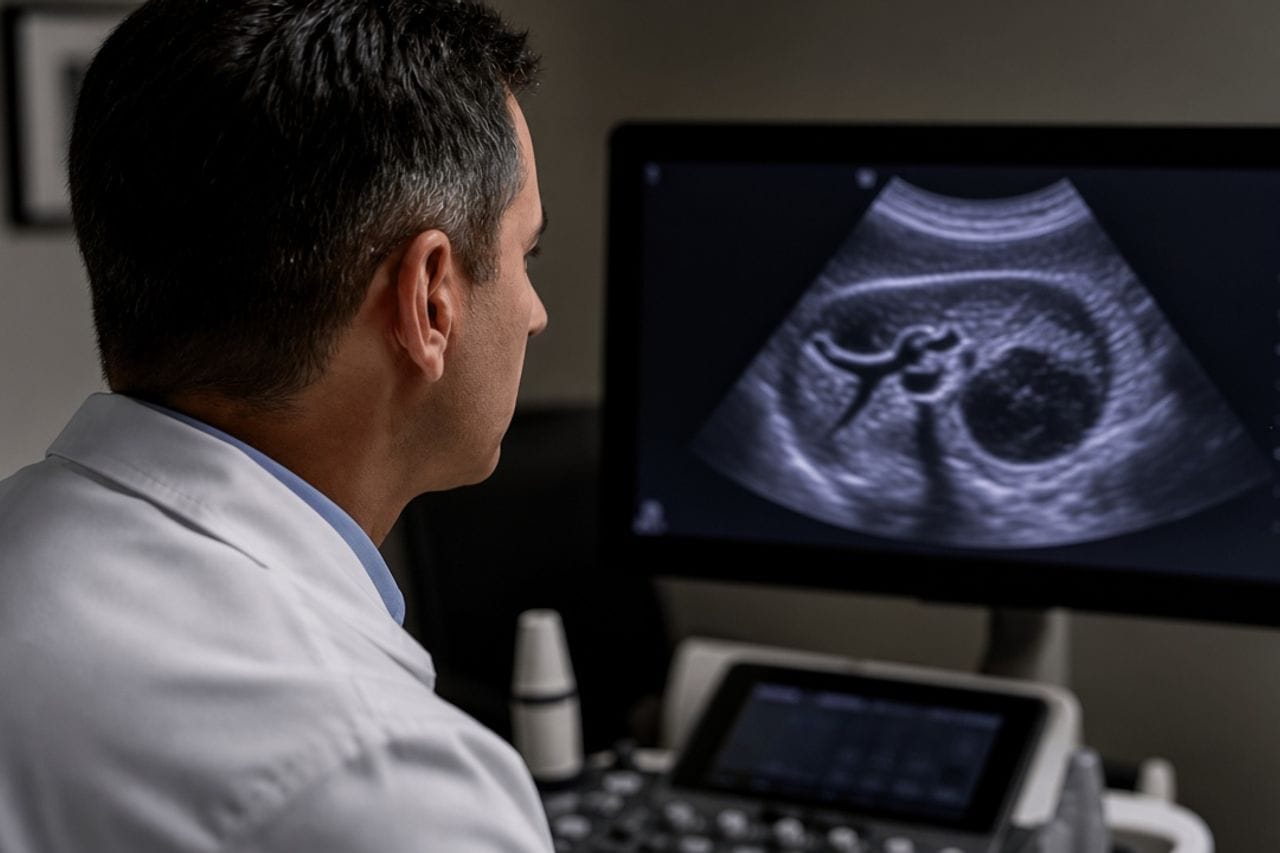
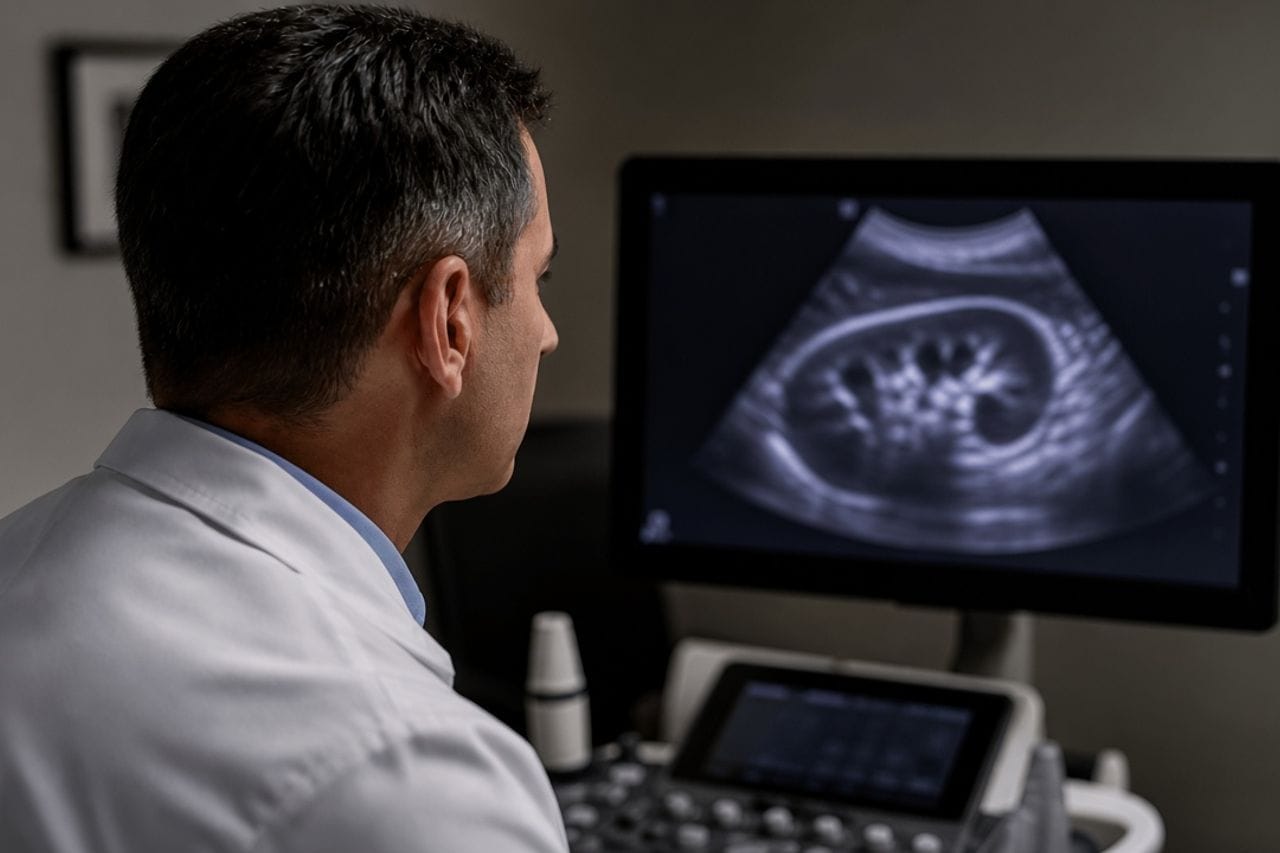
Cystic echinococcus is a bubble with a capsule. Alveococcosis grows in the liver as a dense infiltrate, without a cavity you can "see and measure as a cyst." For years a person notices nothing. The first complaints are nonspecific: heaviness on the right, fatigue, reduced appetite, weight loss without an obvious diet.
Because of this the disease enters the chart late, already with jaundice or with the wording "mass, exclude a tumor." There are no early bright symptoms by which you can make the diagnosis at home. There is a combination of sluggish complaints and a strange ultrasound.
Why the word "cyst" on the form is harmful here: this is not a cyst. How an echinococcus bubble specifically hurts: symptoms of liver echinococcosis. How the diseases differ in principle: the difference.
What happens at the beginning
Heaviness or dull pressure in the right upper abdomen after eating or without a link to food. Fatigue that is blamed on work. A slight evening fever does not happen in everyone. Stool and urine stay ordinary for a long time, so people do not go to a hepatologist.
The liver may enlarge, and a doctor will notice that on exam, not the person themselves. On ultrasound at this moment there is already often a lesion, but it is described as a hemangioma, an area of fatty hepatosis, or an "unclear mass."
Weight loss with a preserved appetite or, conversely, aversion to meat is a somewhat late but common story. By itself it proves nothing. Together with a lesion in the liver it does not let you close the topic with the phrase "check in a year."
- Heaviness on the right for more than a few weeks is a reason not to stop at one ultrasound.
- Weight loss plus a liver lesion is not automatically cancer, but it is CT.
- Normal biochemistry tests do not cancel the lesion.
- Evening fever without a cold with such a lesion is not "just a virus."
- Bring old ultrasounds: growth of the infiltrate matters more than one size.
When symptoms become obvious
Jaundice, itching of the skin, dark urine, and pale stool appear when the lesion presses the bile ducts. This is already a complication, not the debut. Before it the disease is easy to take for gastritis. What to do with jaundice specifically in alveococcosis: when it is urgent.
An enlarging abdomen, swelling of the legs, and heaviness after a small portion of food happen if blood flow through the liver is affected. This is not "ascites from diet" and not a reason for diuretics without scans.
Fever with chills at this stage can mean inflammation of the ducts. It is not treated with an antibiotic "just in case" alone until it is clear what is compressed.
How complaints differ from an echinococcus cyst
A round cyst hurts when it becomes large or ruptures. Alveococcosis hurts little even with a large lesion, but more often gives weight loss and late jaundice. On a scan a cyst has a wall and fluid. In alveococcosis the edge is irregular, inside there is dense tissue, often with small cavities and calcifications, but this is not a "bubble."
A sudden catastrophe with a rash and a drop in blood pressure is atypical for alveococcosis. If that happened, they first think of rupture of cystic echinococcus: rupture.
Both diseases occur in the same region, and one person can theoretically have confusion in the papers. They are not treated by one protocol. Alveococcosis stage is written with the letters PNM, not CE: PNM stages.
Which investigations make sense
Ultrasound poses the question. Borders, vessels, ducts, and nearby nodes are seen on CT and MRI. Without them the phrase "looks like a tumor" hangs in the air, and the person is either frightened with cancer or reassured in vain.
An antibody test is useful as a supplement. A negative result with typical CT does not exclude alveococcosis. A positive one without a lesion is also not equal to a diagnosis. Serology does not replace a scan: ELISA.
Why each method and what to bring to a consultation: CT and MRI. If the process has already gone to the chest or the head, liver complaints are only part of the picture: lungs, brain.
When not to wait a planned month
Jaundice, rising itch, fever with pain in the side, sudden weakness, vomiting, confusion — the same day, not a waiting list. Pale stool and dark urine with an already known lesion are the same priority.
Headache with seizures against a liver lesion is a reason to look at the brain, not to blame blood pressure. This is a rare but direct address of a distant lesion.
Planned, but without putting it off for six months: weight loss, heaviness, any new "mass" on liver ultrasound with an irregular edge. Yearly observation is appropriate after the diagnosis and stage are already clear, not instead of them.
- Do not be reassured by the phrase "the cyst is small" if an infiltrate is described.
- Do not start antitumor treatment until alveococcosis is excluded.
- Do not do a liver biopsy "for speed" if the CT picture is parasitic: a puncture can seed the track.
- Have liver chemistry done, but do not expect that it must be bad.
- In children do not write the same complaints off as school fatigue: alveococcosis in children.
Review at Visus Medical
Send ultrasound and, if you have it, CT. We say in plain language: this is an alveococcosis infiltrate, an echinococcus cyst, or it is still unclear, and how urgently further investigation is needed.
If the word "cancer" has already been said, the scans are still worth rereading before surgery or chemotherapy. A mistake in this direction is not rare in the region: confused with oncology.
Alveococcosis. A CT disc is more useful than a retelling of the report. The text often lacks the series that shows vessels and ducts.
Need an echinococcosis consult?
Message us on Telegram or WhatsApp — we’ll review your scans and suggest a plan.